Subsidiaries










Plumbing systems are among the few building systems that operate continuously, directly affect occupant comfort and hygiene, and are extremely difficult to repair once construction is complete. Poor planning or installation can lead to leakage, acoustic failures, hydraulic instability, odor penetration, and high long-term maintenance costs.
Despite this, plumbing is still often perceived as a “simple” trade. In reality, modern plumbing systems are highly engineered infrastructures that integrate hydraulics, acoustics, thermal expansion, chemical resistance, flow dynamics, and multidisciplinary coordination.
This article examines why plumbing systems are critical to overall building performance, which recurring failures continue to appear in modern projects, and what engineers, consultants, and contractors must consider to ensure long-term system reliability.
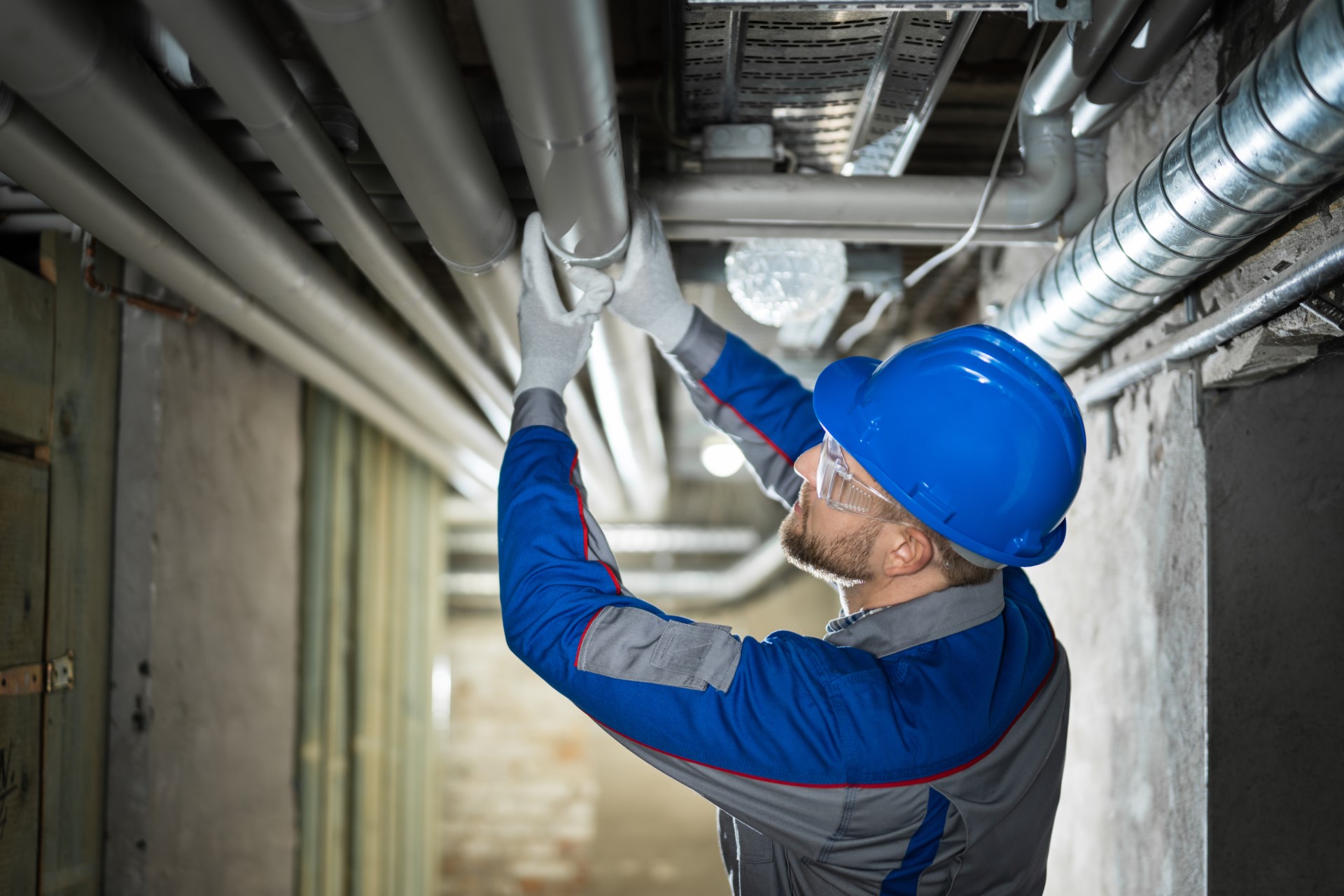
Plumbing infrastructure accompanies a building throughout its entire lifecycle. Unlike HVAC equipment, lighting fixtures, or façade components that can often be replaced or upgraded relatively easily, most plumbing systems are concealed inside walls, shafts, slabs, ceilings, and concrete structures. As a result, every design and installation decision carries long-term consequences.
When a plumbing system is properly designed, occupants rarely notice it. Water pressure remains stable, temperatures are consistent, wastewater drains quietly, and the system operates without odor or vibration issues. However, when planning or installation is inadequate, failures eventually emerge, sometimes immediately, and sometimes years after occupancy.
Noise transmission, recurring blockages, pressure imbalance, concealed leakage, odor migration, and waterproofing failures are not isolated “maintenance issues”; they are indicators of systemic design or execution deficiencies. In that sense, plumbing is one of the least forgiving systems in any building.

Historically, plumbing systems were primarily associated with water delivery and wastewater evacuation. Today, modern systems must simultaneously address high-rise pressure management, acoustic insulation, thermal movement, chemical resistance, fire protection integration, sustainability requirements, and long-term maintainability.
Consequently, plumbing engineering has evolved into a multidisciplinary field that combines: hydraulic engineering, flow mechanics, structural acoustics, material science, BIM coordination, and integrated building systems planning.
A plumbing engineer today is no longer simply “designing pipe layouts.” In practice, they are responsible for a critical infrastructure layer that directly influences occupant wellbeing, building durability, and operational continuity over decades.
This complexity becomes particularly evident in high-density residential towers, hospitals, hotels, and public buildings, where plumbing systems are expected to perform continuously under highly variable operating conditions while maintaining pressure stability, acoustic comfort, thermal reliability, and maintenance accessibility.
One of the most significant transformations in the industry over the past decade has been the growing importance of plumbing acoustics.
In the past, wastewater noise was often considered unavoidable. Today, especially in premium residential developments, hospitality projects, healthcare facilities, and office buildings, drainage noise is increasingly treated as a design failure rather than an acceptable side effect.
Wastewater noise is not generated solely by the pipe itself. It is the result of multiple interacting factors, including: flow velocity, turbulence at branch connections, diameter transitions, pipe fixation methods, vibration transfer into the building structure, and overall hydraulic geometry.
For this reason, modern acoustic drainage systems are no longer based solely on “soundproof pipes,” but rather on complete system engineering.
The Ultra Silent™ by Huliot Group system, for example, utilizes a multilayer pipe structure incorporating PP-MD mineral-modified layers specifically designed to improve both acoustic and mechanical performance. In addition, the system has been tested according to EN 14366 and demonstrates very low airborne and structure-borne noise levels for building drainage applications.
For plumbing engineers, the implication is clear: acoustics is no longer an optional enhancement, it is an essential design parameter.

One of the most common misconceptions in the industry is the assumption that plumbing failures are primarily caused by defective products. In reality, many failures originate at interfaces between systems.
Transitions between plastic and metal materials, wall and slab penetrations, inadequate thermal expansion compensation, incorrect fixation methods, and insufficient coordination with waterproofing systems frequently become the true weak points of the building.
In many cases, moisture damage is not caused by pipe failure at all, but rather by improper integration between plumbing and waterproofing contractors. Lack of coordination creates vulnerable interfaces that may only become visible years later.
This is precisely why plumbing engineering requires a system-level perspective rather than isolated component selection. Pipe supports, shaft planning, thermal movement accommodation, fixation technology, and penetration detailing all have long-term implications for building performance.
The transition from traditional metallic systems to advanced polymer-based piping systems has fundamentally reshaped modern plumbing engineering.
Today’s PP-R, PE-X, PE-RT, and multilayer systems by Huliot Group provide substantial advantages in corrosion resistance, hydraulic smoothness, chemical durability, installation efficiency, and lifecycle performance.
Modern PP-R systems, for instance, are designed to operate under elevated temperatures and pressures over extended service periods while maintaining mechanical and hydraulic stability. Fiberglass-reinforced systems further reduce thermal expansion while improving dimensional stabilitpipe supports, shaft planning... penetration detailingy throughout the network.
At the same time, Push-Fit technologies and systems such as Smart Lock™ have transformed installation methodologies by reducing installation time and minimizing field errors. However, these technological advances also demand a significantly higher level of professional understanding. Engineers, consultants, and installers must now evaluate not only hydraulic capacity, but also thermal behavior, material compatibility, acoustic performance, joining technologies, integration with adjacent systems, and future maintenance implications.

As systems become more advanced, the gap between engineering intent and on-site execution continues to grow.
In many projects: the hydraulic design is correct, the specification is accurate, and the selected products are appropriate, yet installation practices in the field fail to comply with system requirements.
This is one of the primary reasons why technical training and professional knowledge transfer have become increasingly important across the industry. More manufacturers and engineering organizations now recognize that product quality alone is insufficient without proper installation methodology and system understanding.
Initiatives such as Flow Academy by Huliot Group, were developed precisely around this concept — bridging planning, engineering, execution, and technical education into a shared professional framework.
Ultimately, even the most advanced plumbing system cannot deliver reliable long-term performance if it is not installed correctly.

Behind every hydraulic calculation, technical specification, or pipe routing decision are the people who will ultimately live and work inside the building.
Plumbing systems directly influence: occupant comfort, acoustic wellbeing, hygiene, operational reliability, and the overall perception of building quality.
When the system is properly engineered, occupants are largely unaware of its existence. They simply experience stable water supply, quiet drainage, thermal comfort, and a building that functions reliably without recurring disruption.
And perhaps that is the true benchmark of a successful plumbing system — not how visible it is, but how seamlessly it performs in the background.
Plumbing systems are among the most critical infrastructures in any building because they simultaneously influence building functionality, occupant comfort, acoustics, hygiene, maintainability, sustainability, and long-term operational reliability.
Modern plumbing engineering requires comprehensive system thinking — not simply “pipe selection,” but the integration of hydraulics, materials engineering, acoustics, installation methodology, maintenance strategy, and long-term lifecycle performance.
Precisely because plumbing systems are largely invisible once construction is complete, their importance becomes even greater.

Discover how Huliot Group is integrating artificial intelligence across manufacturing, operations, quality, finance, and customer service to build a smarter industrial organization.