Subsidiaries










Sewer infrastructure is shifting from concrete to plastic pipes because traditional materials struggle with modern wastewater conditions, while plastic systems offer superior resistance to corrosion, easier installation, improved hydraulic efficiency, and longer lifecycle performance. Advanced polypropylene and HDPE systems are not just replacing materials—they are redefining how sewer networks are designed, installed, and maintained. Across Europe and other developed infrastructure markets, municipalities, contractors, and engineers are increasingly adopting plastic solutions as part of a broader move toward sustainable, high-performance infrastructure systems.
The Real Problem Behind Sewer Infrastructure Failures
For decades, concrete and metal pipes defined sewer infrastructure. They were strong, familiar, and widely accepted across municipal and commercial projects. But the conditions modern sewer systems operate under today are fundamentally different from the environments those systems were originally designed for.
Modern wastewater is significantly more aggressive from a chemical perspective. Industrial discharge, detergents, fats, biological activity, and fluctuating wastewater temperatures all contribute to the formation of hydrogen sulfide gas, which oxidizes into sulfuric acid inside sewer pipes. This acid attacks concrete from within, gradually weakening the pipe structure over time.
What makes this especially problematic is that deterioration often develops long before visible failure occurs. Cracks, infiltration, leakage, and structural degradation may remain hidden for years while maintenance costs continue to grow in the background.
At the same time, urban infrastructure is becoming more demanding. Population density is increasing, stormwater loads are becoming less predictable, and systems must cope with greater hydraulic variation than ever before. Rigid materials such as concrete are inherently limited in their ability to absorb movement or adapt to changing ground conditions. As soil shifts or thermal expansion occurs, stress accumulates in the pipe structure, eventually leading to cracking and failure.
This is one of the primary reasons municipalities and infrastructure planners are reassessing traditional sewer materials and increasingly moving toward engineered plastic systems.
Why Plastic Pipes Are Becoming the Preferred Choice
One of the biggest advantages of plastic sewer systems is that they eliminate one of the core failure mechanisms affecting traditional infrastructure: corrosion.
Polypropylene (PP) and polyethylene (HDPE) are highly resistant to the aggressive chemical environments commonly found in wastewater systems. Unlike concrete or metal, they do not react with acidic gases, biological activity, or fluctuating wastewater chemistry. This allows the system to maintain structural integrity over long periods without the gradual degradation associated with conventional materials.
This transition is not simply about improving durability slightly. It fundamentally changes the maintenance equation. Municipalities can reduce rehabilitation frequency, lower inspection requirements, and achieve more predictable long-term infrastructure performance.
Installation efficiency is another major driver behind the transition.

In many sewer infrastructure projects, installation complexity represents a substantial portion of total project cost. Traditional concrete systems require cranes, heavy transportation equipment, large installation crews, and extended construction timelines. Plastic systems reduce much of this burden because they are significantly lighter and easier to handle.
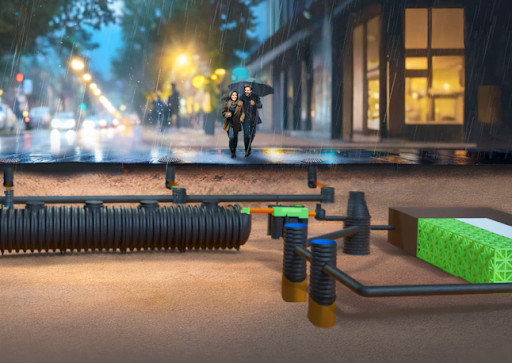
This becomes especially important in dense urban environments where excavation windows are limited and traffic disruption carries substantial indirect costs. Faster installation means shorter road closures, lower labor intensity, and reduced impact on surrounding infrastructure and residents.
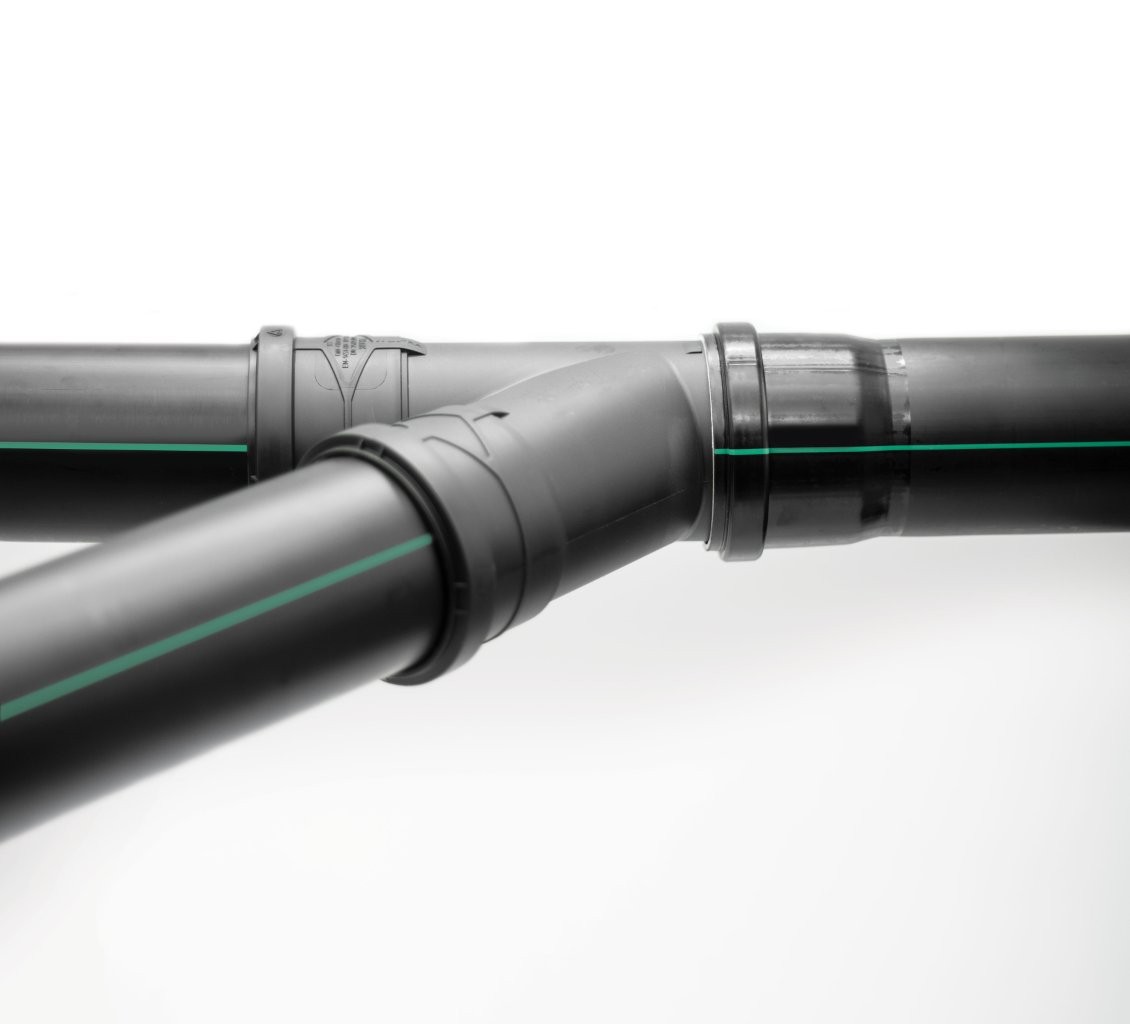
Modern connection technologies also contribute to installation efficiency. Push-fit systems with elastomer seals simplify assembly while maintaining reliable sealing performance. Systems designed with modular compatibility improve repeatability during installation and reduce the likelihood of connection-related errors.
Another major difference lies in how plastic systems respond to external stress.
Concrete survives by rigidity. Plastic survives through controlled flexibility.
This distinction becomes critical in unstable soils, coastal environments, seismic regions, and areas exposed to long-term settlement. Advanced polypropylene systems are engineered to absorb stress and redistribute loads rather than crack under pressure. Some multilayer systems are specifically designed to reduce longitudinal bending and improve structural stability in shifting soil conditions.
For infrastructure planners, this means reduced risk of structural failure caused by environmental conditions rather than material degradation.
From Pipes to Integrated Infrastructure Systems
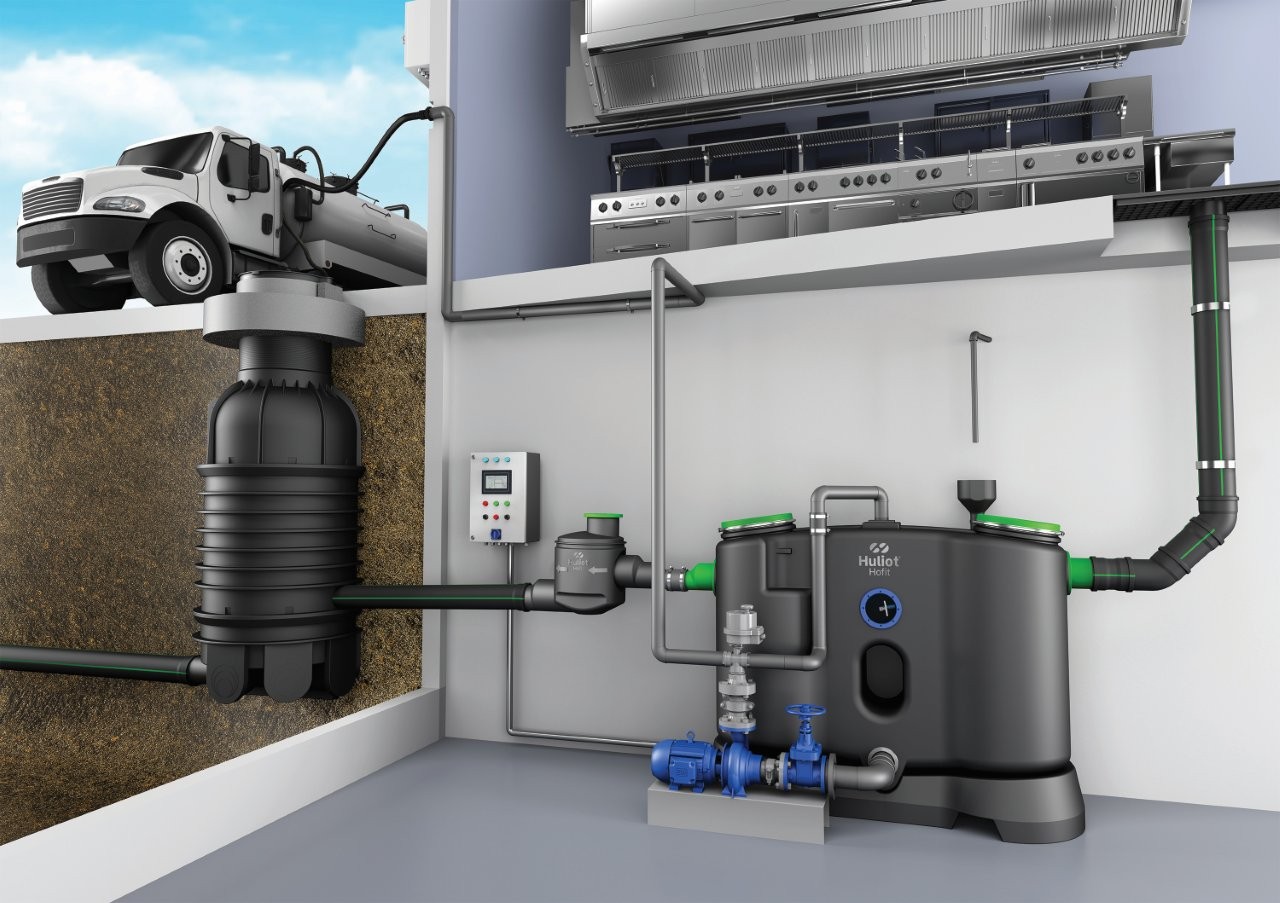
The transition to plastic is also part of a broader shift in infrastructure engineering philosophy. Modern sewer systems are no longer treated as isolated products. Increasingly, they are designed as integrated systems where pipes, fittings, chambers, drainage components, and infrastructure accessories are engineered to function together as one coordinated solution.
This system-based approach aligns closely with Huliot Group’s strategy, which positions infrastructure as a connected flow ecosystem rather than a collection of independent components.
Modern multilayer sewer pipes demonstrate how far plastic infrastructure engineering has evolved. These are no longer simple single-material products. Instead, they are engineered structures composed of multiple functional layers designed to optimize different performance requirements simultaneously.
For example, advanced acoustic drainage systems such as Ultra Silent™ utilize a triple-layer polypropylene construction. The external layer provides impact resistance and UV durability, the reinforced middle layer improves mechanical strength and sound insulation, and the internal layer is optimized for smooth hydraulic flow and visual inspection clarity.
This type of engineering precision is extremely difficult to achieve with concrete systems.
Hydraulic performance is another often underestimated advantage.
Smooth internal pipe surfaces reduce friction and improve flow behavior throughout the network. Lower friction means fewer deposits, lower sediment accumulation, reduced blockage risk, and more stable long-term hydraulic performance. In some applications, improved flow efficiency may even allow optimization of pipe sizing and network design.
Over decades of operation, these efficiency improvements accumulate into lower maintenance costs and more predictable infrastructure behavior.
Lifecycle Economics Are Driving the Transition
A common misconception is that plastic sewer pipes are selected simply because they are cheaper.
In reality, the most important driver behind the transition is lifecycle cost performance.
Infrastructure owners increasingly evaluate systems not only based on purchase price, but on total cost of ownership across decades of operation. This includes installation cost, maintenance frequency, inspection requirements, rehabilitation risk, downtime, and operational disruption.
Plastic systems often outperform traditional materials significantly when viewed through this broader economic lens.
Maintenance access itself has become a major infrastructure expense in modern cities. Excavating roads, interrupting transportation systems, and coordinating underground utility repairs can cost more than the actual repair operation. Reducing intervention frequency therefore creates substantial operational and financial value.
Plastic systems also support more predictable lifecycle planning because they eliminate many corrosion-related uncertainties associated with concrete infrastructure.
Sustainability and the Net-Zero Infrastructure Transition
Sustainability has become one of the strongest strategic drivers behind the shift toward plastic piping systems.
At first glance, some decision-makers question whether plastic can truly align with environmental goals. However, lifecycle analysis increasingly shows that modern plastic piping systems often outperform traditional alternatives such as concrete or metal when evaluated across the entire infrastructure lifecycle.
Plastic piping systems are lightweight, highly durable, corrosion resistant, and designed for service lives that can extend for several decades. Multiple lifecycle assessments have demonstrated that plastic piping can offer lower environmental impact compared to concrete or metal alternatives, especially when considering transportation, maintenance, replacement cycles, and energy consumption.
Plastic systems also support circular economy initiatives through recyclability and reduced waste generation.
Huliot Group’s environmental programs reflect this transition. The company’s “Going Green” initiative reduced landfill waste dramatically while implementing Reduce-Reuse-Recycle (RRR) policies across manufacturing operations.
Environmental Product Declarations (EPDs) are also becoming increasingly important in European infrastructure procurement processes. These declarations provide transparent lifecycle data regarding environmental impact, including emissions, water pollution, and resource consumption.
For infrastructure projects targeting long-term sustainability goals, these factors are becoming central to material selection decisions.

Europe Is Accelerating the Adoption of Plastic Infrastructure
European markets are among the strongest drivers behind the transition to plastic sewer systems.
The reasons are closely connected to:
European standards such as EN 1451, EN 14366, DIN 8078, and DIN EN 13501 provide a mature framework for evaluating plastic drainage systems and acoustic performance.
Modern systems are certified by international organizations including SKZ, DIBT, DTI, and AENOR, providing engineers and municipalities with confidence regarding compliance and long-term reliability.
This standardization has accelerated adoption across residential, commercial, and infrastructure projects throughout Europe.
Common Mistakes When Transitioning to Plastic Sewer Systems
One of the most common mistakes is assuming plastic systems should be designed exactly like concrete systems.
Plastic behaves differently. Its performance depends on flexibility, soil interaction, proper bracket positioning, and correct installation methodology. Ignoring these factors can compromise long-term system behavior.
Another mistake is focusing only on the pipe itself instead of evaluating the full system. Long-term reliability depends heavily on compatibility between fittings, seals, chambers, drainage accessories, and installation technologies.
Installation quality also plays a critical role. Acoustic systems, for example, require careful isolation from rigid structural elements in order to maintain sound insulation performance.
There is also a tendency to compare only upfront material costs while ignoring decades of operational savings, maintenance reduction, and infrastructure reliability.
In reality, the transition to plastic is not only a material replacement—it represents a broader evolution in infrastructure design philosophy.
How to Evaluate Plastic Sewer Solutions
Selecting the right solution is not just about the material—it involves evaluating how the entire system performs throughout its lifecycle.
Experienced engineers typically assess:
Failure analysis is especially important. Plastic eliminates corrosion, but system performance still depends on proper engineering design, installation quality, and long-term structural stability.
Suppliers that offer complete system solutions generally reduce compatibility risks because the entire infrastructure ecosystem is designed to function together.
Real-world operating conditions should also be evaluated carefully. Engineers increasingly analyze how systems behave under cyclic loading, water-saturated soil conditions, thermal variation, and long-term deformation stress.
These considerations are becoming central to modern infrastructure planning across Europe and other advanced construction markets.
Summary and Next Step
The transition from concrete to plastic sewer pipes is not a temporary industry trend. It is a structural response to the limitations of traditional infrastructure materials under modern operating conditions.
Plastic systems solve fundamental challenges related to corrosion, installation complexity, hydraulic inefficiency, maintenance burden, and long-term reliability. More importantly, they enable a shift toward smarter, integrated infrastructure systems designed for modern urban environments and long lifecycle expectations.
As infrastructure markets continue prioritizing sustainability, operational efficiency, and lifecycle performance, plastic piping systems are becoming a central component of next-generation sewer infrastructure.
To explore integrated drainage and infrastructure solutions, visit:
https://www.huliotgroup.com/
Suggested internal links needed from Huliot website.
FAQ
1. Why are sewer systems shifting from concrete to plastic?
Because plastic systems offer corrosion resistance, easier installation, lower maintenance, and improved lifecycle performance.
2. What plastics are commonly used in sewer infrastructure?
Polypropylene (PP) and HDPE are among the most widely used materials.
3. Are plastic sewer pipes durable enough for infrastructure projects?
Yes. Modern multilayer systems are engineered for high mechanical resistance and long-term performance.
4. How do plastic pipes resist corrosion?
Plastic materials are chemically resistant and do not react with wastewater acids or gases like concrete does.
5. Is installation really faster with plastic pipes?
Yes. Their lower weight and push-fit technologies significantly reduce installation complexity.
6. What are multilayer sewer pipes?
They are engineered pipes with multiple layers designed for flow optimization, strength, durability, and sound insulation.
7. Are plastic sewer systems sustainable?
Many systems are recyclable and supported by EPD documentation for environmental transparency.
8. What standards apply in Europe?
Key standards include EN 1451, EN 14366, DIN 8078, and DIN EN 13501.
9. Can plastic systems be used underground?
Yes. Many systems are specifically designed for buried and underground applications.
10. Is the transition to plastic happening globally?
Yes, especially in Europe and developed infrastructure markets focused on lifecycle value and sustainability.

Discover how Huliot Group is integrating artificial intelligence across manufacturing, operations, quality, finance, and customer service to build a smarter industrial organization.